


What’s actually happening when your dog doesn’t respond and what to do about it
If you’ve ever stood in a park repeating “come” fifteen times while your dog runs around like you don’t exist, you know the feeling. It’s frustrating and it can feel personal. And it’s very easy to land on the word “stubborn.”
But here’s the thing: dogs don’t hold grudges. They don’t have a hidden agenda. They don’t tune you out just because. When a dog isn’t responding, something else is happening, like something in their environment has their attention, they’re in an intense emotional state, or their training history makes it hard for them to do what you’re asking.
Understanding what that something is changes everything about how you approach it. So, let’s break down the three most common reasons a dog goes unresponsive and what you can do about them.
They’re Over Threshold
Every dog has a threshold, the point at which their nervous system is so activated by arousal, fear, excitement, or stress that they can't take in or act on new information. Above that threshold, a dog isn’t being stubborn. They are overwhelmed.
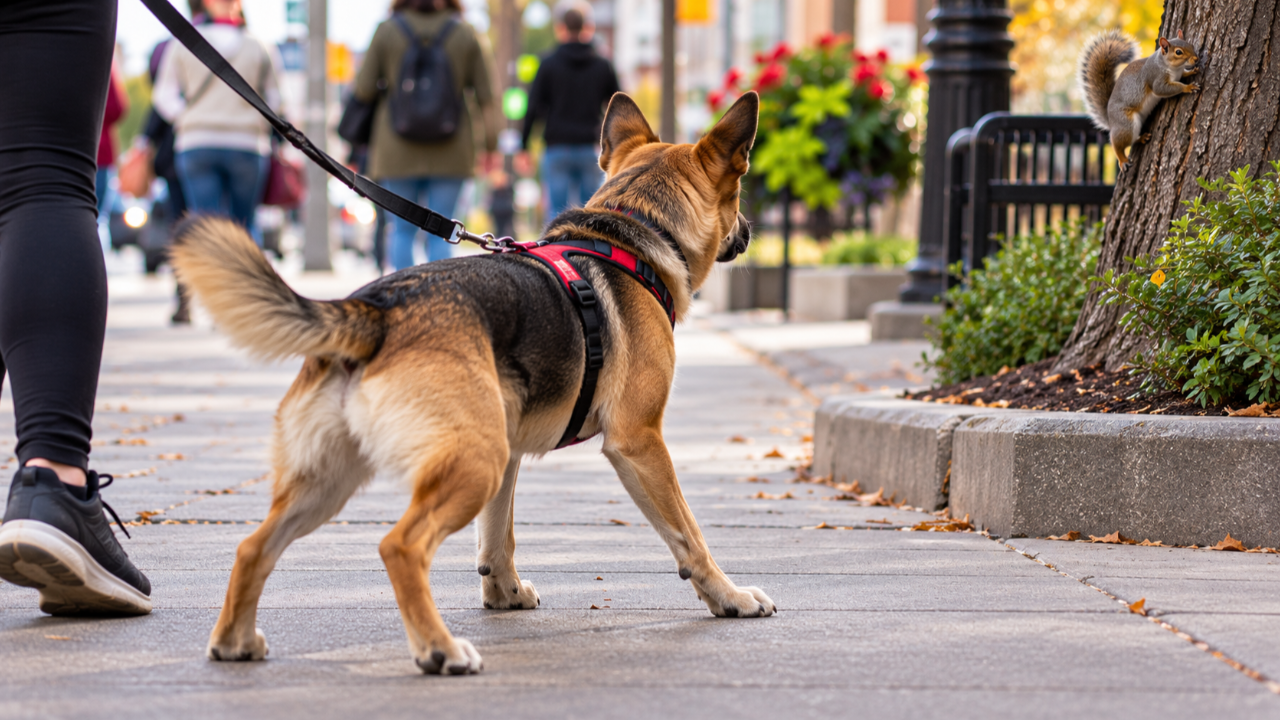
Picture a dog who has been building arousal since they spotted another dog half a block away, then kids whiz by on a bike, and a squirrel runs up a tree while dogs bark from the windows at them. By the time you ask for a “sit,” their brain is flooded. The cue lands, but it can’t be processed. Not because they’ve decided not to comply, but because the capacity to comply simply isn’t available in that state.
“Over threshold” isn’t a character flaw. It’s a physiological state and it responds to management, not pressure.
The solution here is not to repeat the cue more firmly or loudly, or to get frustrated, or to assume the dog is being disobedient and just needs more force. The solution is to reduce what’s activating them, like moving away from the trigger, giving them space to decompress, and asking for something simpler once they’re back under threshold. Asking for more in a flooded state doesn’t help. It just adds to the noise and builds frustration for you both.
The Cue Has Lost Its Meaning
Here’s something that happens in almost every household: a cue gets repeated without result often enough that the dog learns the first repetition means nothing. “Sit. Sit. Siiiit. SIT.” By the time there’s a consequence, good or bad, the dog has heard the word four times. So, four times becomes the actual cue.
This is not the dog’s fault. It’s a training history issue. The cue has been practiced in conditions that didn’t set the dog up for success, or repeated when the dog couldn’t respond, or not reinforced reliably enough in the early stages to build real value. Over time, the cue just becomes background noise.
A cue that’s repeated without result isn’t being ignored. It’s been accidentally trained to mean “this word doesn’t matter yet.”
The fix is not more repetition. It’s rebuilding the value of the cue from the ground up. That means going back to basics, or a new word if the old one has been poisoned, and practicing in easy conditions with high reinforcement rates until the cue is reliable again before adding difficulty. One cue. One opportunity to respond. Then help them succeed and slowly build up in more distracting environments. This is what most people miss: the dog responds well at home, so we expect them to perform the skill everywhere and with every distraction, without fully appreciating how much we’re asking and how little groundwork has been laid for it.
You’re Competing With Something That Pays Better
A dog who blows past a recall to chase a squirrel is not being disobedient. They are being a dog. Squirrels are fast, exciting, and deeply biologically relevant. The reinforcement they offer with the thrill of the chase is enormous. Coming back to you, in that moment, needs to compete with that. And if the training history isn’t there to support it, it can’t.
This is called a reinforcement gap. It simply means that the behaviour of coming to you hasn’t been built to the level where it can reliably outcompete high-value environmental distractions. That’s not a character flaw. It’s a training goal and a realistic one.
Reliability in a distraction-heavy environment is built deliberately over time. It takes practice and repetition.
The question to ask when a dog doesn’t respond isn’t “why won’t they listen?” It’s “have we practiced this enough, in enough contexts, with enough reinforcement value, to make it reliable here?” If the answer is no, that’s data, not defiance.
What To Do When Your Dog Isn’t Responding
If your dog isn’t responding, repeating yourself louder or more urgently is the least effective thing you can do. Here’s what helps:
Increase the distance. If there’s a distraction in the environment, like another dog, a person, or a squirrel, move further away from it before asking again. More distance means less arousal, which means more capacity to respond.
Check the environment before you ask. Is this a fair ask right now? Is your dog over threshold? Has something in the environment just changed? Meeting your dog where they are is not lowering your standards. It’s training intelligently and fairly.
Rebuild the cue if it’s lost meaning. If you suspect the cue has been poisoned through repetition, stop using it. Work with a trainer to rebuild value for the behaviour under a new cue, in easy conditions first.
Practice in easier conditions before harder ones. Reliability at home comes before reliability at the dog park. Reliability at the dog park at quiet times comes before reliability at the dog park on a busy day.
Make responding worth it. The reinforcement you offer when your dog comes back matters. It’s about laying a solid and positive foundation to reach training goals faster. If coming to you means the fun stops, the leash goes on, or nothing much happens — the dog is making a rational choice. Make recall the best thing that ever happened to them every single time.
Your Dog Wants to Get It Right
Dogs are not adversaries and they are not trying to win. They are doing their best with the information they have, in an environment they don’t fully control, with a nervous system that responds to the world before their thinking brain catches up.
When a dog doesn’t respond, the most useful question is not “why are they being like this?” It’s “what does this tell me about what they need right now?” The answer to that question is always somewhere in their threshold, their training history, or the competition in their environment.
That’s good news. Because all of those things are things we can work with.
If you’re stuck with something like your dog’s recall is unreliable, if cues have stopped working, or if you’re not sure where to start rebuilding, find a trainer who offers training beyond foundational classes. Our YYC Dog program is built around exactly this by giving you and your dog the reliable, lifelong skills to be a welcome canine companion wherever you go.
