


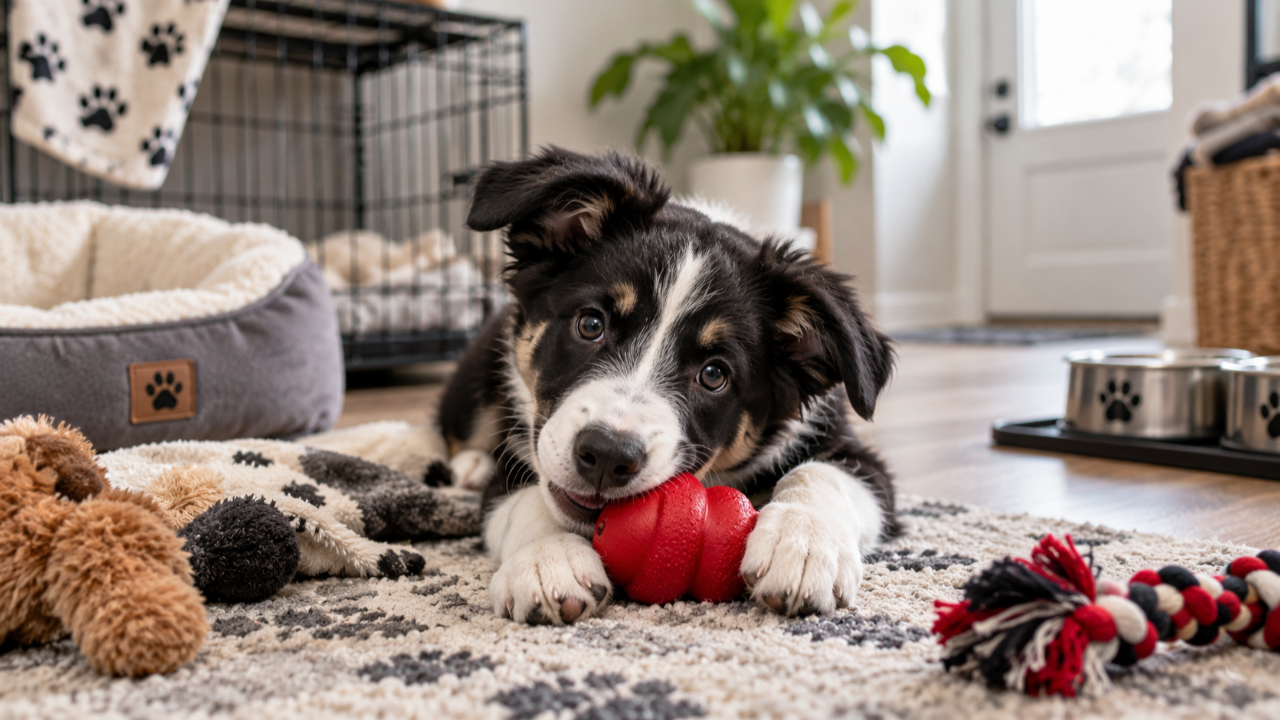
It’s 3am. The puppy is crying. You’re exhausted. And you’re starting to wonder if you’ve made a terrible mistake.
You haven’t. But nobody warned you it would be quite this hard, quite this fast, or quite this challenging. The first week with a new puppy is one of those experiences that is difficult to prepare for, and one that almost every puppy owner looks back on and says the same thing about: I wish someone had told me what to expect.
Here’s what’s happening, from your puppy’s perspective and yours, and what to do about it.
What the First Week Actually Feels Like
The puppy cries at night. They bite everything like your hands, your ankles, your furniture, and your patience. They have accidents in places you didn’t think were possible. They are simultaneously the cutest thing you have ever seen and the most exhausting creature you have ever encountered.
You will question your decision. Probably more than once. You will be sleep deprived in a way that feels wildly disproportionate for an animal this small. You may find yourself Googling things at 2am that you would be embarrassed to Google at 2pm.
This is all completely normal. Every puppy owner has been exactly where you are. The first week is hard for almost everyone and the people who tell you it wasn’t are either not remembering or had very exceptional puppies.
The first week is hard. It is also temporary. And it passes faster than it feels like it will.
What Your Puppy Is Going Through
Here is the most important thing to understand about the first week: your puppy is a baby. Not metaphorically. Literally. A very young animal who, just days ago, likely had everything they needed - their mother, their littermates, every familiar smell and sound and sensation that told them the world was safe, and now has none of it.
They have arrived in an entirely unfamiliar environment. New smells, new sounds, new people, new experiences, new everything. They do not yet know your voice from a stranger’s. They do not know what is expected of them. They do not know whether this place is safe.
The crying at night is not manipulation. It is a baby calling for comfort that is no longer there. The clinginess is not a behaviour problem. It is a very young animal trying to stay close to the only source of warmth and safety currently available to them. The chaos is not your puppy being difficult. It is your puppy trying to make sense of an overwhelming transition with the limited tools available to them at this age.
When you find yourself frustrated, and you will, come back to this: they are just babies. They are doing the best they can with what they have. So are you.
They are not being difficult. They are adjusting to the biggest change of their life so far.
What to Focus On This Week
The temptation in week one is to do everything. Start training, socialize them with every dog and person you encounter, establish all the routines, figure out the crate, teach sit, address the biting. The internet will tell you that the socialization window is closing and that every day matters and that you should be doing more.
Here is what matters in week one:
- Yours and theirs. Rest is when puppies process, grow, and consolidate what they’ve learned. An overtired puppy is harder to manage, harder to read, and harder to help. Protect their sleep and yours.
- Gentle handling. Every time you touch your puppy calmly and positively, you are building the association that your hands mean safety. This is one of the most important things you can do right now and it requires no formal training at all.
- A consistent routine. Predictability is safety for a young puppy. Same times, same sequences, same responses from you. When the world behaves consistently, it starts to feel manageable.
- Short, positive experiences. Keep everything brief and good. A short positive and calm outing is worth far more than a long overwhelming one. End before things fall apart. Avoid big events or experiences.
- Connection. Just being together, calmly, without an agenda. Let them explore you. Sit on the floor with them. Be a calm, safe presence. This is not wasted time. This is the foundation.
- Reward the good stuff. Help lay a positive foundation by rewarding behaviour your want to see more of.
You do not need to teach sit this week. You do not need to start leash training. You do not need to have the crate fully figured out. Your only real job this week is to help your puppy understand that this new place, and the people in it, are safe.
What to Let Go Of
Give yourself permission to not do everything yet.
You don’t need a perfect routine by day two. You don’t need to socialize them with every dog and person you encounter this week. You don’t need to feel confident yet asconfidence comes with time and experience, and nobody has it in week one. You don’t need to have it all figured out.
The first week is survival mode. And surviving it well with patience, with calm, with consistency and kindness is the best thing you can do for your puppy’s future. Not the most impressive thing. The best thing.
Calm, positive, and safe. Those three things, repeated consistently, will do more for your puppy in week one than any training programme, any gadget, or any advice from the internet — including this post.
The One Thing That Matters Most
Safe is the foundation everything else is built on.
A puppy who feels safe explores more confidently. Learns more readily. Recovers from setbacks more quickly. Builds deeper trust. The puppy who grows up knowing that their environment is predictable and their people are calm and kind is a fundamentally different dog than one who didn’t have that foundation.
Everything you will ever teach your dog (every skill, every behaviour, every milestone) is built on top of this. And the foundation is built in exactly the kinds of moments that feel unremarkable right now. The quiet moments. The patient ones. The 3am ones where you get up and just sit with them.
You are already building it. Even when it doesn’t feel like it. Even when the week feels like chaos. Every gentle interaction, every calm response, every consistent routine is laying something that will matter for the rest of their life.
Help them feel safe first. Everything else follows.
It Gets Easier
The first week passes faster than it feels like it will. The puppy who cried all night will learn to sleep. The one who bit everything will learn what they can and can’t bite. The chaos will settle into something that starts to feel settled and a routine.
And when you’re ready for what comes next like formal training, the socialization, the skills, we’re here. KinderPups is designed specifically for this stage of a puppy’s life, and it’s where the foundation you’ve been building this week gets built on.
The work you’re doing this week will matter for the rest of their life.
