


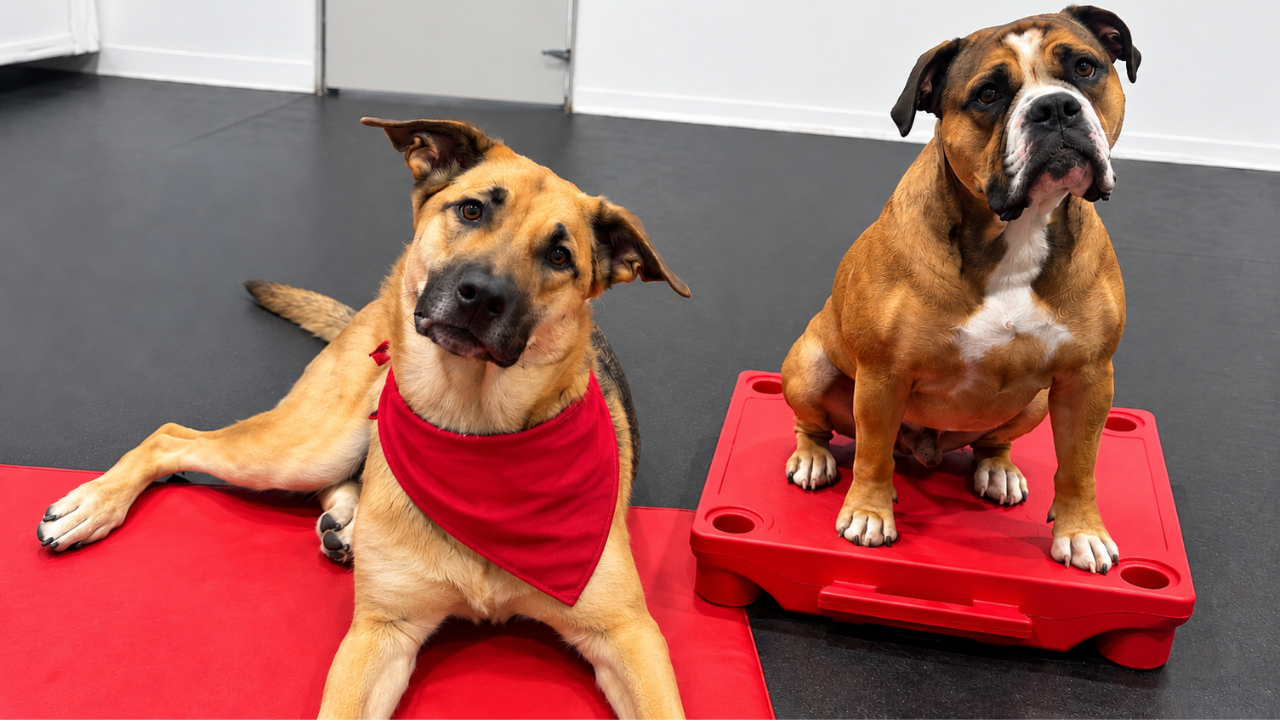
If you’ve been told your dog can’t do group settings, or if their behaviour has been getting worse since joining one, this post is for you.
Most dog daycare facilities are built for easy dogs. Dogs who slot comfortably into large groups, who regulate well in high-stimulation environments, who don’t need much individual attention or adjustment. And for those dogs, most facilities work fine.
But there is a significant population of dogs who need something different. Dogs who are selective, over-aroused, fearful, reactive, or simply not well served by the standard daycare model. Dogs who have been turned away, or who have been going to group settings and quietly getting worse. Dogs whose guardians have been told that a group environment just isn’t for them.
These are often exactly the dogs we can help. And this post is about why.
The Selective Dog
Selective does not mean aggressive. It describes a dog who has preferences about who they interact with, how much interaction they want, and when they’ve had enough. These are entirely legitimate preferences, and in the wild or in a well-managed environment, they would simply be respected.
In a large, unstructured daycare group, those preferences are rarely respected because there is no one with the expertise or the capacity to track them. The selective dog gets overwhelmed, overstimulated, or pushed past what they can handle. They respond by shutting down, escalating, or both. They come home more stressed than they left. And eventually someone decides they’re not a group dog.
In our environment, selective dogs often thrive. Small groups mean fewer dogs to manage. Certified trainers mean someone is actually watching and adjusting. Managed interactions mean the selective dog gets to have the kind of social experience that works for them, rather than being dropped into chaos and left to cope. Dogs who have been labelled difficult elsewhere are frequently doing beautifully within weeks of joining us.
Selective isn’t a problem. It’s a preference and we respect it.
The Over-Aroused Dog
Over-arousal looks like a lot of things. Excessive barking. Inability to settle. Escalating play that tips into conflict. A dog who winds up rather than winds down as the day progresses. Guardians often describe these dogs as “too much” - too energetic, too intense, too difficult to calm.
Standard daycare environments tend to make this significantly worse. More dogs, more noise, more chaos, more stimulation with no structure to manage it. These are exactly the conditions that push an already dysregulated dog further over the edge. The dog who comes home bouncing off the walls after daycare, who can’t settle for hours, who seems more reactive than before they went in. Or they are absolutely exhausted by being in overdrive all day. This is often what over-arousal in an unstructured environment looks like.
Our approach is built around a different premise entirely. Every day starts with enrichment before arousal has a chance to build. Activities rotate deliberately throughout the day. Our trainers track each dog’s arousal state and adjust accordingly. A dog who cannot regulate in chaos can often learn to regulate in structure because structure gives them the predictability and the support they need to practice coming back down.
Structure isn’t a restriction. It’s a relief.
The Fearful or Reactive Dog
Fearful and reactive dogs are frequently told they can’t do group settings. And in most group settings, that is true because most group settings put them in exactly the conditions that make their fear and reactivity worse. Large groups, unpredictable interactions, no one watching closely enough to intervene before a stress response escalates.
Our setup is different. Small numbers of dogs mean the environment is less overwhelming. Predictable routines reduce the need for constant vigilance. Certified trainers who understand canine body language can read stress signals long before they escalate into a reaction and adjust the situation accordingly.
We don’t flood fearful dogs with exposure and hope they get used to it. We build their experience carefully, at their pace, in an environment where they can begin to feel safe. And a dog who feels safe is a dog who can start to learn. That is always where we begin.
The Dog Building Confidence Around Other Dogs
Not every dog who struggles around other dogs is reactive in the clinical sense. Some are simply under-socialized as they haven’t had enough positive experiences with other dogs to feel comfortable around them. Some have had experiences that made other dogs feel unpredictable or threatening. Some are overwhelmed by the sheer volume of dog-to-dog interaction that a standard group setting involves.
What these dogs need is very specific: controlled, positive experiences with other dogs at a pace they can handle. Not a dog park, where the interaction is unmanaged and unpredictable. Not a daycare group with twenty+ dogs, where the volume alone is too much. Carefully managed interactions with dogs whose behaviour is known, in an environment where the intensity can be avoided or adjusted.
Confidence around other dogs is built one good experience at a time. Our environment is designed to provide exactly that.
Other Dogs We’re Set Up to Help
Beyond the dogs described above, our setup allows us to accommodate needs that many facilities simply can’t or won’t address.
Intact dogs. Many facilities exclude intact dogs entirely or place significant restrictions on them without the expertise to manage them thoughtfully. Our certified trainers understand the dynamics involved and can work with intact dogs in a way that is safe and appropriate for them and for the other dogs in their group.
Dogs who need limited play or more rest. Not every dog needs or benefits from a full day of group interaction. Some dogs, like seniors, dogs recovering from something, dogs who hit their limit faster than others, may need a day that is tailored rather than standard. We can do that. Our small groups and our continuous tracking mean we can adjust a dog’s day based on how they’re doing, not just how the schedule runs.
Dogs whose behaviour has been worsening in other environments. This is one of the most important and most overlooked categories. A dog who is going to group settings and coming home more stressed, more reactive, harder to manage, or exhausted - that is a dog whose environment is actively making things worse. We see this regularly, and we know what it looks like. If this sounds familiar, please reach out.
Why Our Setup Makes All of This Possible
None of what we’ve described above happens by accident. It is the direct result of deliberate decisions we have made about how Dogma operates. Decisions that cost us capacity and revenue, but that give us something more valuable: the ability to help the dogs that need us most.
- Maximum 4 dogs in group play. Maximum 8 per trainer in day school. These ratios are not standard.
- Certified trainers, not attendants, working with every dog throughout the day. The difference in what they see and what they can do is significant.
- Continuous behavioural tracking so that changes are caught early, before they become problems.
- Enrichment built into every day, starting before arousal has a chance to build.
- Strict capacity limits so that no dog ever gets lost in the crowd.
These are the same decisions that underpin our assessment process and our willingness to make difficult calls about which dogs are and aren’t served by our programs. It is all the same value system: we are here for the dogs, and every structural decision we make reflects that.
We could operate differently. We could take more dogs, hire less qualified staff, run larger groups, and earn significantly more revenue. We choose not to. Because the dogs we can help when we operate this way are the ones who need it most and that matters more to us than the ones we could take if we didn’t.
This is the Dogma Difference. Not just stated. Demonstrated.
Talk to Us First
If you’ve been told your dog can’t do group settings, or if their behaviour has been getting worse since joining one, please reach out.
We assess every dog carefully and honestly. If we believe we can help, we will tell you exactly how and what that would look like. If we don’t think we’re the right fit, we will tell you that too and do our best to point you toward something that is.
We are not the right place for every dog. But we may be exactly the right place for yours. Call or email us anytime.
We might be exactly what they need.
