


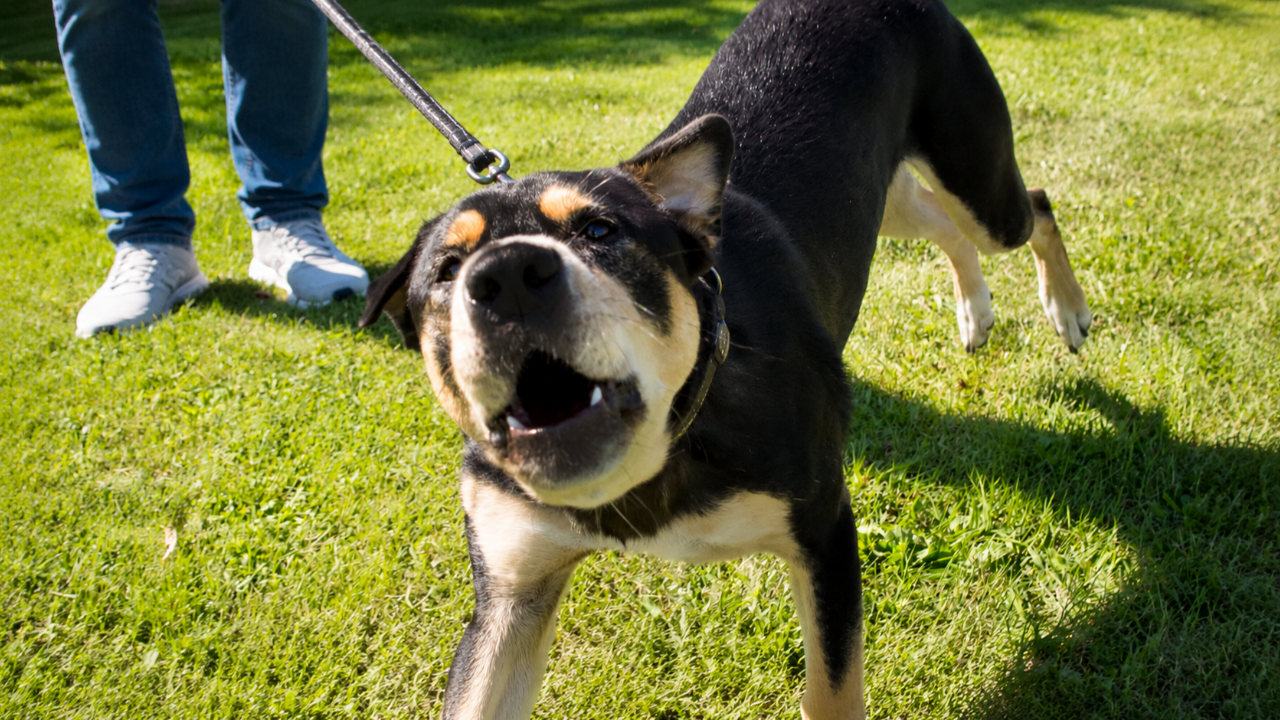
The walk was going fine.
And then it wasn’t. Another dog appeared around a corner, or a cyclist came too fast, or something you couldn’t even identify, and your dog exploded. Barking, lunging, pulling so hard you could barely hold on. Strangers staring as you apologize, your heart racing.
And now you’re standing there wondering: what was I supposed to do? What do I do next time?
This post is the answer to that question. Some things help, some things make it worse, and there’s a way of thinking about reactivity that changes how you approach every walk, including the ones that don’t go well.
Let’s start with what’s happening.
What’s Actually Happening in That Moment
When your dog reacts, they have crossed what trainers call their threshold - the point at which the emotional brain takes over. Under threshold, your dog can think, learn, take treats, and respond to cues. Above it, none of that is available to them. The rational, responsive dog you know has temporarily shut off, and what’s left is pure emotional response.
This is why repeating “sit” or “leave it” doesn’t work mid-reaction. It’s not that your dog is ignoring you. They genuinely cannot process language or instruction in that state. Asking a dog to respond to a cue while they’re over threshold is like asking someone to solve a math problem in the middle of a panic attack.
Understanding this changes everything. Because once you know that nothing useful can be taught in that moment, you stop trying to train through the reaction and start focusing on the only thing that actually matters: getting out the situation.
But first, let’s talk about trigger stacking.
Most reactive dog owners are familiar with the obvious triggers such as the specific dog, person, or situation that sets their dog off. What fewer people understand is that reactions are rarely caused by a single trigger. They’re caused by accumulation.
Think of your dog’s emotional capacity as a bucket. Every stressor on a walk adds to that bucket, like the squirrel they spotted at the start, the bicyclist that flew past, the child who ran toward them, the unfamiliar smell, the dog they saw across the street. None of those things individually pushed them over the edge, but each one added something to the bucket. And when the last trigger appeared, the bucket was already almost full, so it tipped over.
This is called trigger stacking. And it explains the reaction that seems to come completely out of nowhere - the one that happens on what looked like a perfectly calm walk, caused by something that wouldn’t normally be a problem at all.
It didn’t come out of nowhere. Everything that came before it filled the bucket. The last trigger just tipped it over.
It’s not about the last trigger. It’s about everything that came before it.
Your Only Job in the Moment is to Get Out
When your dog is in a full reaction, there is only one goal: increase distance from the trigger as quickly and calmly as you can.
Not correct, not reassure, not make them sit, focus, or respond to you. Just move by turning around, crossing the street, stepping behind a parked car, or going down a side street – do whatever creates the most space between your dog and whatever triggered them. Get your body between them and the trigger if you can.
Keep moving and keep consistent pressure on the leash (avoid yanking) until you feel two things: the leash loosen and your dog’s body relax. Those are the signs that they’re coming down. The leash loosening matters because a tight lead is itself a stressor and keeps them in an elevated state even after the trigger has gone.
And through all of this, your own calm matters. Your nervous system is information to your dog. If you’re tense, rushing, or panicking, they feel it. Take a breath and slow your movements. We understand how difficult that can be, but you don’t have to feel calm to act calm, and acting calm helps both of you.
What Makes It Worse
The instinctive responses to a reacting dog are understandable, but most of them backfire. Here’s what to avoid:
Punishment mid-reaction. Correcting a dog while they’re reacting increases their stress and creates an association between the trigger and something bad happening. It doesn’t teach them to feel better about the trigger. It teaches them to feel worse, which means a bigger reaction next time.
Repeating commands. Saying “sit, sit, SIT” to a dog who is over threshold just adds more noise to an already overwhelming situation. It doesn’t reach them and it doesn’t help.
Flooding. Standing still and waiting for them to “get over it” keeps them at close range to the trigger while they’re already over threshold. This rarely de-escalates and often makes the association worse.
Tightening the leash. The instinct to pull your dog back is natural, but a tight lead tells your dog that something is wrong and increases arousal. Keep as much slack as you safely can.
Matching their energy. Shouting, panicking, or rushing in a tense way escalates the situation. Your dog reads your body language constantly. The calmer you can be, the faster they come down.
The Recovery Moment
Once you’ve created distance and your dog starts to come down, watch for the check-in - the moment they look back at you.
Not the moment they stop barking or not when they finally sit. The moment they choose to reconnect with you after the reaction. That voluntary turn toward you is the most important moment of the entire walk.
Mark it with a calm, quiet “yes” and give them a treat. You’re not celebrating the reaction - you’re rewarding the recovery. You’re telling your dog that coming back to you is the right thing. Every single time you catch that moment and reward it, you’re building a dog who turns to you faster the next time and your strengthening your relationship.
After the check-in, carry on with the walk as normally as you can. Don’t dwell on it, don’t end the walk immediately in a panic, and don’t let your own lingering anxiety colour the rest of the outing. Or perhaps take a moment to let them sniff, or play with a toy with you, or go through some of their favourite tricks.The reaction happened and it’s done. What matters now is the recovery.
The goal isn’t a perfect walk. It’s a dog who keeps coming back to you.
Reframing What Success Actually Looks Like
If your dog is reactive, reactions are going to happen. That is not a training failure. It’s the reality of having a reactive dog. Your dog, whose nervous system responds to the world more intensely than most other dogs.
Measuring success by whether reactions happen is the wrong thing to focus on. It will keep you frustrated, keep you feeling like you’re failing, and keep you missing the real progress that is happening.
Real progress with a reactive dog looks like this: reactions become less frequent over time. The intensity starts to drop and the explosions become smaller. Their recovery gets faster - the time between the reaction and the check-in shortens. They are more focused on you.
The only time a reaction truly becomes a failure is when we keep putting our dog back into the same situation, at the same intensity, before they’re ready. That’s not training. That’s repeatedly filling the bucket to the top and being surprised when it spills.
Allow yourself to let go of the perfect walk. The walk that ends with your dog checking in with you, even after a reaction, is a good walk. That moment of connection is the whole point.
Progress is measured in smaller reactions, faster recoveries, and more moments where they chose you instead.
You Are Not Failing Your Dog
Reactive dogs are hard and the walks are hard. The embarrassment is real and the guilt of loving a dog and still finding them genuinely difficult is something many owners carry.
But every walk where you got out calmly, waited for the check-in, and rewarded the recovery - that was a win. Even if it didn’t feel like one.
The work you’re doing is cumulative and it compounds. The patient, consistent owner who keeps showing up, even on the hard days and even after the stressful walks, is the one whose dog makes the most progress.
One reaction doesn’t define your dog. And one bad walk doesn’t undo the work you’ve done.
