


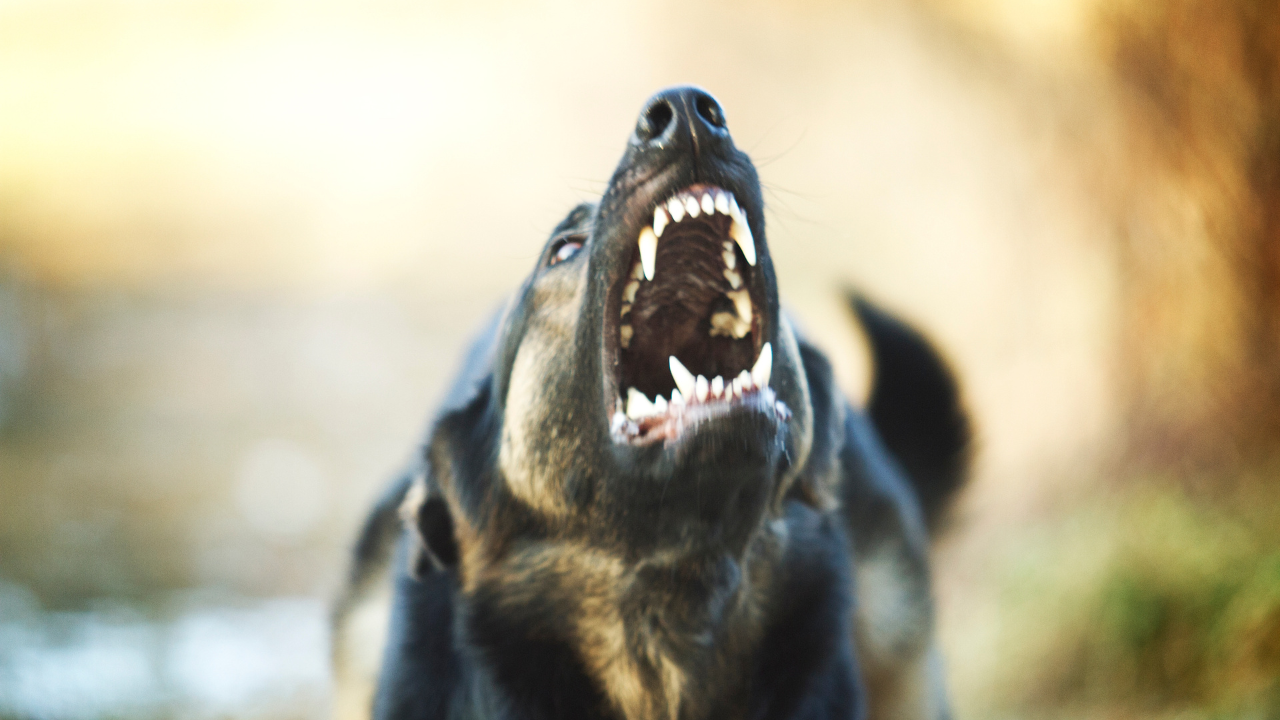
“My dog is reactive.” “My dog is scared of other dogs.” “My dog is fearful.”
We hear these phrases used interchangeably all the time, as if fear and reactivity are simply two words for the same thing. They’re not. And the difference between them matters far more than most people realise.
Fear is an emotion while reactivity is a response. One is what a dog feels and the other is what we see them do about it. And because the same loud, dramatic behaviour can come from completely different emotional states, getting this distinction right changes everything about how we help a dog.
Fear Is the Emotion
Fear, at its core, is a dog wanting to create distance from something that feels threatening. That might look like freezing in place, trying to hide behind their owner or under furniture, tucking their tail, lowering their body, or trying to physically get away.
Here’s the part that surprises a lot of people: fear is quiet far more often than it’s loud. A dog who has frozen completely still, who has gone silent and rigid, is not a calm dog. They may be utterly terrified and simply unable to move. Because this doesn’t look as dramatic as barking or lunging, it gets missed constantly. Owners describe a frozen, shut-down dog as “fine” or “just being stubborn” when in reality that dog is having one of the most distressing experiences a dog can have.
Fear says: I want this to go away from me, or I want to go away from it. Sometimes that comes out as retreat. Sometimes, when retreat isn’t possible, it comes out as something louder.
Reactivity Is the Response
Reactivity is the outward, often loud reaction to an internal state. Barking, lunging, growling, pulling toward or away from something - these are all reactivity. They are what we observe from the outside.
Here’s the key point: reactivity on its own tells you almost nothing about what’s driving it. A dog lunging and barking at another dog could be terrified and trying to make the scary thing go away. They could be intensely frustrated because they want to greet the other dog and physically can’t. Or they could be so overstimulated and wound up that the behaviour is closer to an overflow than a deliberate response to anything specific.
Three very different internal experiences. The exact same behaviour on the outside.
Reactivity is the volume. Fear is often the cause.
The Three Common Drivers of Reactivity
Most reactivity falls into one of three categories, although dogs can absolutely experience a blend of more than one.
Fear-based reactivity comes from a dog who genuinely feels under threat. Their body language often includes lowered posture, tucked tail, ears pinned back, and a strong desire to retreat that’s being blocked - often because they are on a leash and cannot get away. This dog needs safety, distance, and time above almost everything else.
Frustration-based reactivity often comes from a dog who is quite social and wants to approach a person, another dog, or anything they find exciting. But it is prevented from doing so, usually by a leash. The body language here tends to be more forward and bouncy, even as the behaviour looks similarly loud. This dog often needs an outlet for that social drive and dedicated work on impulse control.
Over-arousal-based reactivity comes from a dog whose excitement or stimulation has simply tipped past what their nervous system can regulate. It can look like a combination of the other two and is often the hardest to pin down without watching the dog’s full pattern over time. This dog needs help learning to regulate 0 not more stimulation, which can make things worse.
Telling these apart usually requires looking at body language, context, and history together, and not just the moment of the reaction itself. This is exactly the kind of pattern recognition that takes a trained eye and time spent with a dog to really understand.
Why Treating the Behaviour Without Understanding the Emotion Backfires
A generic approach to “stopping the barking” sounds appealing, but it can genuinely make things worse depending on what’s driving the behaviour.
If a dog’s reactivity is fear-based and the approach is to push them closer to their trigger to “desensitize” them without proper support, that dog often becomes more afraid, not less. If the dog is frustration-based and the response is to simply prevent any access to social interaction altogether, the frustration tends to build rather than resolve. And if a dog is over-aroused and the solution offered is more exercise or more exciting play to “burn it off,” that dog often ends up more wound up than before.
Three dogs. Three very similar-looking presentations on a walk. Three completely different paths forward. Misunderstanding the root cause doesn’t just slow progress down - it can actively move a dog backward.
The right help starts with the right understanding.
A Dog Screaming for Help
We say this often at Dogma, and it feels especially true once you understand the distinction between fear and reactivity: when I hear a reactive dog, I hear a dog screaming for help.
This is particularly true for fear-based reactivity. The dog who is barking and lunging the loudest is not the bravest dog in the situation as they are often the most overwhelmed. The volume of the behaviour and the size of the feeling underneath it are frequently mismatched in exactly the opposite direction people expect. A dog who seems aggressive is often a dog who is desperately afraid and has run out of quieter ways to communicate that.
Understanding the difference between fear and reactivity is how we hear what our dogs are telling us and help us respond to the right thing, instead of just the loudest thing.
You don’t need to understand your own dog perfectly. But understanding that fear and reactivity are different things, and that different drivers need different solutions, helps you ask better questions - of yourself, of your vet, and of any trainer you work with.
If you’re not sure what’s driving your dog’s reactivity, that’s exactly what we’re here to help figure out.
