


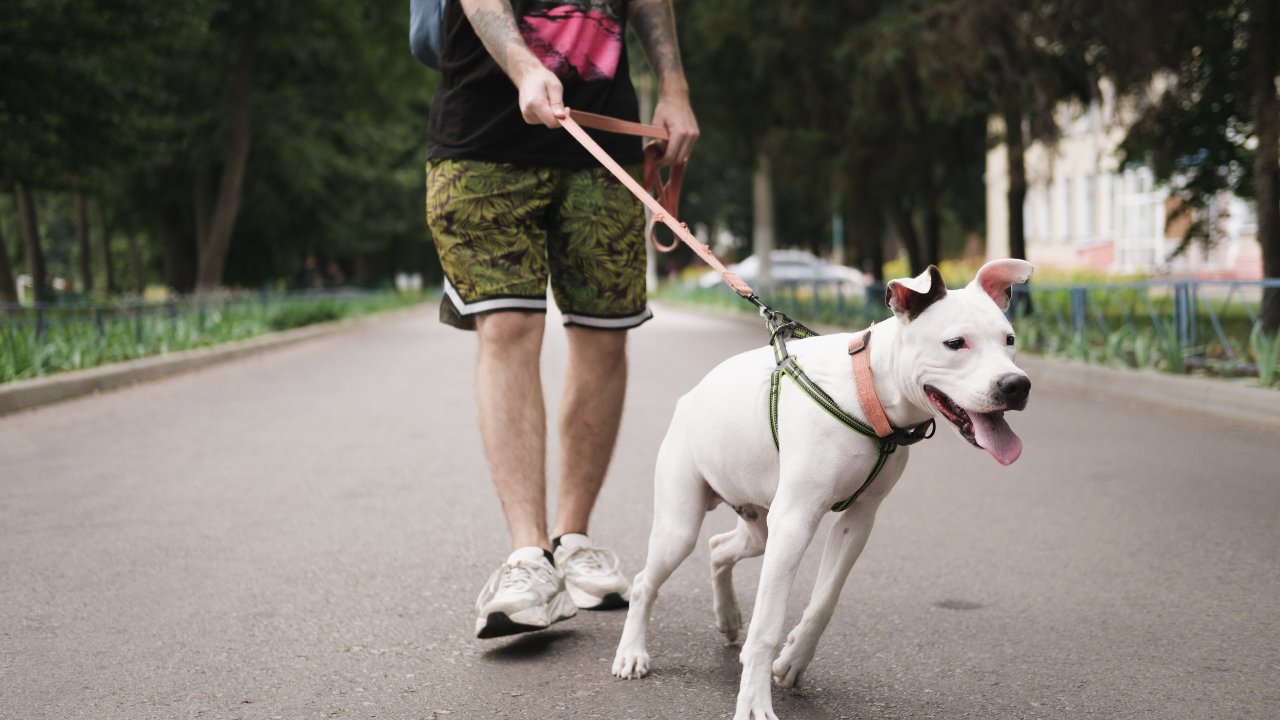
Your puppy was doing so well.
They were responding to cues, walking reasonably well on leash, and settling when asked. You were starting to feel like you’d found your rhythm together, and then, somewhere around six or eight months, something shifted. The dog who knew their name suddenly acts like they’ve never heard it. The recall that worked at the park is nowhere to be found. They’re pushier, mouthier, more easily distracted, and harder to reach.
Most owners assume they’ve done something wrong. That they’ve missed something. That the training has broken down somehow. The reality is usually much simpler and much more biological: their puppy has hit adolescence.
This phase has a name, a clear explanation, and most importantly, an end. Here’s what you need to know.
What Puppy Adolescence Actually Is
Adolescence is not a training failure. It is a developmental stage that is as real and as significant as the newborn phase, and just as poorly understood by most people going into it.
Between roughly 6 and 18 months, a puppy’s brain undergoes a massive reorganization. Hormones surge. The neural architecture that has been building since birth starts to be pruned and refined. Impulse control, which was never particularly strong in a puppy to begin with, drops further before it climbs back up. The dog who was reliably responding to cues last month suddenly seems to have forgotten everything.
They haven’t forgotten. Their brain is just going through something enormous. And unlike the newborn phase, which most people are at least vaguely prepared for, adolescence tends to arrive without warning and is rarely talked about in the way it deserves to be.
When It Hits and How Long It Lasts
Adolescence typically begins somewhere between 6 and 9 months, though this varies considerably by breed and individual dog. Smaller breeds often hit it earlier and come through it faster. Larger breeds tend to hit it later and the phase can extend well into their second year.
The duration can range from a few months to well over a year. That sounds daunting, but understanding that there is a beginning, a middle, and an end changes how you experience it. You are not in this forever. You are in a phase.
The dogs who come through adolescence best, with their training intact, their relationship with their owner strong, and their confidence well-established, are consistently the ones whose owners knew it was coming and didn’t give up when it arrived.
Knowing what to expect is half the battle.
What It Actually Looks Like
If you’re in adolescence right now, some version of this list will feel very familiar:
- Cues they knew reliably seem to have vanished overnight
- They’re suddenly easily distracted and hard to engage, especially outdoors
- They’re pushier, mouthier, and testing every boundary
- They’re more reactive or sensitive to things that never bothered them before
- They seem to have selective hearing - particularly when something more interesting is nearby
If you’re nodding at this list, you’re in it. And you are not alone.
It is important to name this clearly: this is not defiance, and it is not your dog deciding to be difficult. This is a developmental phase, and the behaviour you’re seeing is a symptom of what’s happening neurologically, not a reflection of your dog’s character or your ability as an owner.
What’s Actually Happening in Their Brain
During adolescence, the brain is going through a process called synaptic pruning - essentially deciding which neural connections to keep and which to let go, based largely on what has been used and practiced most. The brain is becoming more efficient, but the process is messy and disruptive before it settles.
One of the last areas of the brain to fully mature is the prefrontal cortex, which is the region responsible for impulse control, decision making, and the ability to override an emotional response with a rational one. This is why an adolescent dog can appear to know exactly what they should do and still not do it. It genuinely isn’t defiance - the biological infrastructure for reliable impulse control simply isn’t fully online yet.
Layer in surging hormones, a heightened sensitivity to the environment, and a nervous system that is being recalibrated in real time, and you have a dog who is genuinely doing their best with a brain that is temporarily working against them.
They’re not broken. They’re becoming.
Why This Window Matters More Than Most People Realize
Here is the part that changes how most people think about adolescence: because the brain is actively pruning and cementing pathways right now, what you practice during this period is critical. The connections that get used get kept and the ones that don’t get dropped.
This means that consistent, positive training during adolescence isn’t just maintenance. It’s some of the most important work you will do with your dog. And the instinct to pull back and to wait until “they’re through it” before resuming classes or training sessions is the wrong response, even though it’s an understandable one.
We see this play out directly at Dogma. The difference between dogs who continue attending day school and training classes throughout adolescence and those who don’t is substantial and consistent. Dogs who stay engaged with structured training during this phase come through adolescence with their skills more intact, their confidence better established, and their relationship with their owner stronger. They are easier to live with, more reliable in new environments, and more resilient when things get challenging.
Dogs who pause training during adolescence often come back to us several months later having lost ground that takes significant time and work to recover. Not because anything went terribly wrong, but because the window when the brain was most actively cementing those pathways passed without the right input.
This is not the time to reduce training. It’s the time to lean into it.
How to Get Through It Together
Here is what actually helps during adolescence:
- Keep training. Consistency matters more right now than results. Every session is still doing something, even when it doesn’t feel like it.
- Lower your expectations temporarily. Meet your dog where they are right now, not where they were three months ago. This is not regression, it’s a phase.
- Shorten your sessions. Five focused, positive minutes is worth more than twenty frustrated ones.
- Manage the environment. Set your dog up to succeed rather than testing them in situations that are currently too hard. Build back up to those gradually.
- Lean on your trainer. This is exactly what we’re here for. If adolescence has you at your wit’s end, reach out. You don’t have to navigate this alone.
Progress looks different during adolescence. It’s slower, messier, and less satisfying than the rapid learning of early puppyhood. But it is still progress. And every calm, positive interaction you have with your dog right now is building something that will last.
The Puppy You Raised Is Still in There
Adolescence is hard. There will be days when it doesn’t feel like anything is working. When the dog who greeted you so enthusiastically this morning is now completely ignoring you at the park. When you wonder whether all the early work has somehow been undone.
It hasn’t. The puppy you raised is still in there. They are just going through something enormous, and they need you to stick with them while they do.
Every dog comes through adolescence. The ones who come through it best do so with patient, consistent owners who understood what was happening and didn’t give up. That can be you. It already is you, if you’re still here reading this.
If you need support, your Dogma trainer is here. Call or email us anytime - no question is too small, and no adolescent dog is too much.
Every dog comes through this. Yours will too.
