


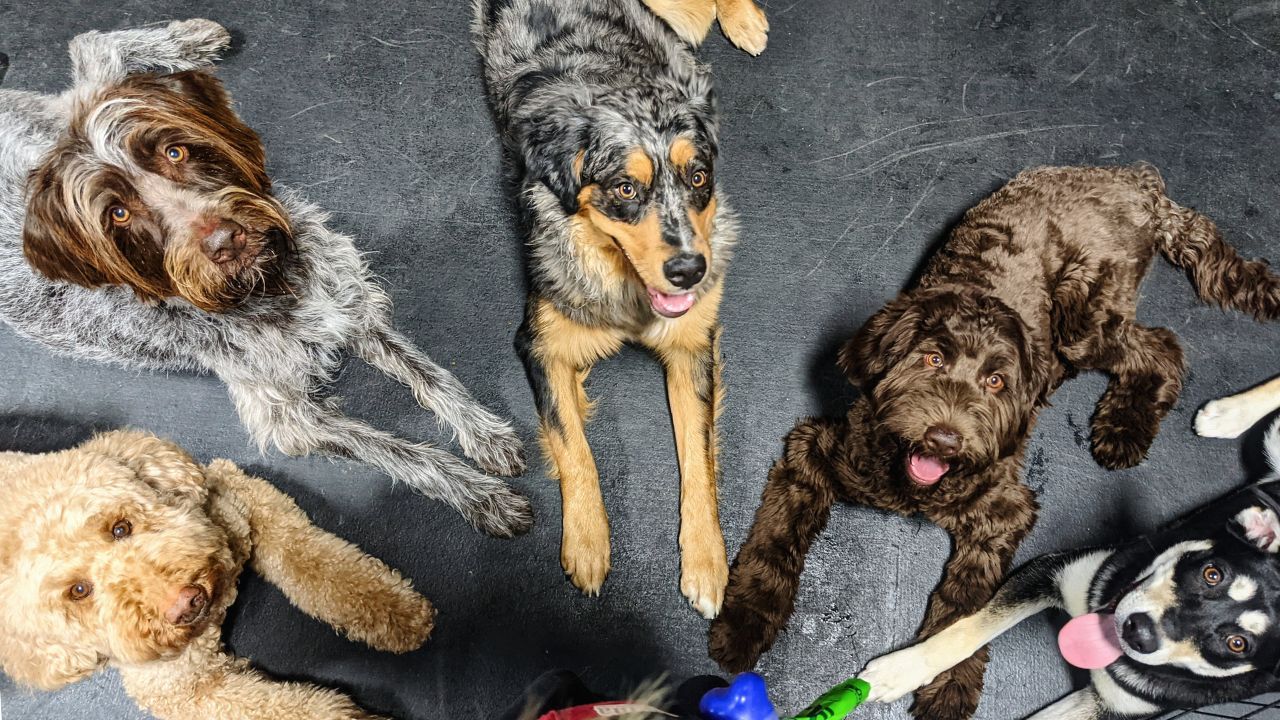
One of the things I hear most often from puppy and dog parents is, “I just want my dog to be social.”
And I get it. We are taught that a “good” dog is friendly, playful, and happy to interact with everyone they meet. Socialization often gets framed as exposure plus play. Meet lots of dogs, play as much as possible, and everything will work itself out.
But after many years of working with dogs, I have learned that this version of socialization is not helping dogs and their families. In some cases, it can actually make things harder for dogs. Socialization is not about teaching dogs to love every other dog. It is about helping them feel safe, confident, and regulated in the world around them.
Some of the most well socialized dogs I know are not the ones racing into play. They are the dogs who can be near others without stress, who can observe without needing to engage, and who feel comfortable choosing space when they need it or giving space when it’s asked for by another dog. Neutrality is an underrated skill, but it is one of the most important ones we can help dogs develop.
Where things often go sideways is when socialization is viewed as constant interaction. Play absolutely has value. The right play, with the right dogs, in the right context, can be wonderful. But when dogs are expected to engage all the time, without breaks or support, we often see the opposite of what we are aiming for. Dogs can become overstimulated, frustrated, or unsure how to settle when other dogs are nearby. Some begin to struggle on leash after too much free interaction. Others learn to ignore their own stress signals because they are constantly pushed past their comfort zone.
We can also unintentionally teach our dogs that seeing other dogs on leash is always exciting. This often happens when we say hello to every dog we pass on walks. It is not so much meeting other dogs that causes challenges, but how those interactions happen. We allow dogs to pull straight toward other dogs without first teaching them to settle and check in with us. We also forget to teach them that sometimes they will not meet other dogs at all. This helps minimize over excitement with other dogs. We can still help dogs feel positive about other dogs simply by rewarding them for noticing another dog and then choosing to bring their focus back to us.
Healthy socialization is quieter than most people expect. It is layered, intentional, and ongoing. It might look like a puppy watching another dog from a distance. Two dogs walking parallel without interacting. A dog choosing to disengage and settle nearby. Short, supported interactions instead of long, chaotic play sessions. Sometimes it looks like nothing much happening at all, and that is exactly the point.
These experiences teach dogs that they do not have to react to everything. That they can pause. That they have choices. That the world is predictable and safe enough to relax in.
This becomes especially important as dogs move out of puppyhood. Adolescence brings big changes emotionally, socially, and neurologically. Dogs who have learned how to regulate themselves, recover from excitement, and cope with being around others without pressure are far better equipped to navigate this stage. Over time, they tend to show more resilience, better focus, and greater confidence.
And here is the part I always want us to really understand:
- If your dog does not love every dog, that is okay.
• If your dog prefers calm coexistence over play, that is okay.
• If your dog needs space, structure, and support, that is not a sign you have done something wrong.
This understanding guides how we approach social experiences at Dogma. We focus on quality over quantity, thoughtful exposure over constant interaction, and building skills that help dogs feel good in their bodies and brains, not just busy.
Socialization is not about creating dogs who love everyone. It is about helping dogs thrive in the world they live in.
