


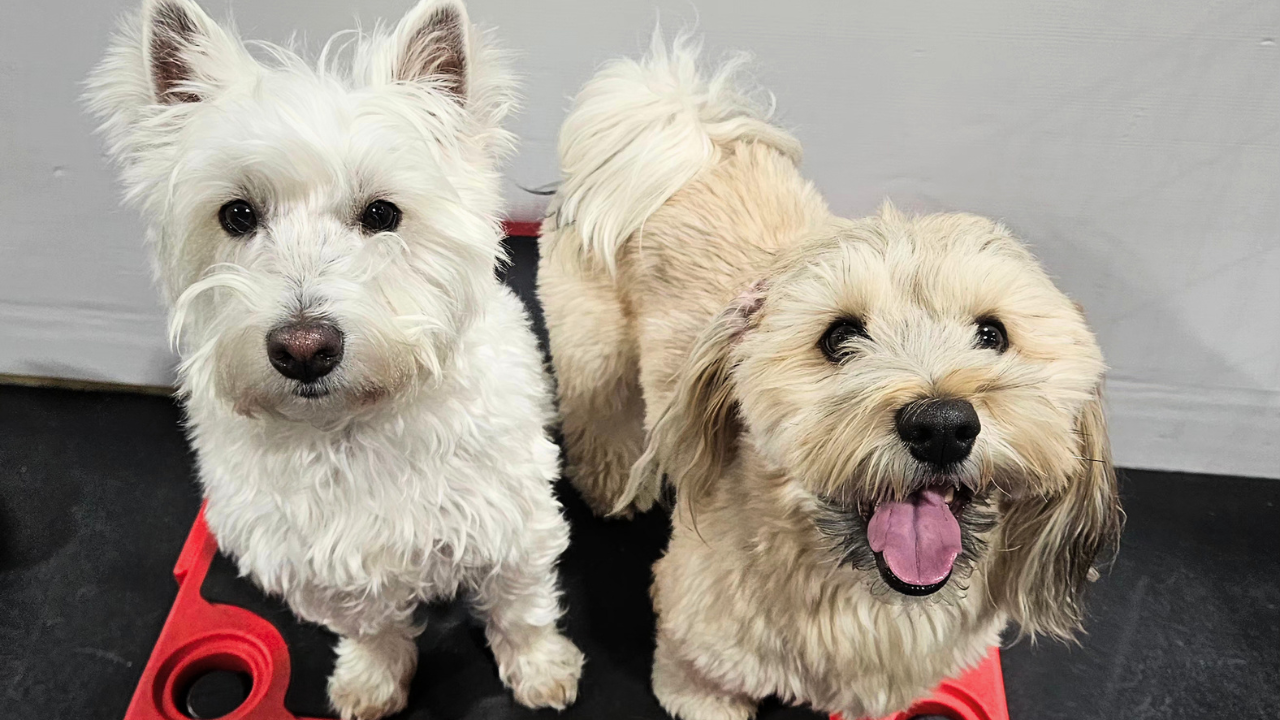
If your dog seems to be ignoring you, acting out, or just not getting it, the problem might not be your dog.
We work with dogs and their families every single day, and one of the most common things we see is this: a frustrated owner who has been trying hard, doing what they think is right, and genuinely can’t understand why their dog isn’t responding. And a confused dog who is doing their best with an unclear picture.
Most of the time, it’s not a behaviour problem. It’s a communication problem.
The good news is that communication problems are fixable. And the five things we’re going to outline are incredibly common. You are not alone, and none of this makes you a bad dog owner. It just means nobody told you.
So, let’s fix that.
1. Inconsistent Rules
The dog is allowed on the couch on Sunday mornings when you’re feeling relaxed, but not on Tuesday evening when you’re wearing nice clothes. Jumping up is adorable when they’re a tiny puppy, but suddenly unacceptable when they’re fully grown. The occasional piece of food from the table is fine, until it isn’t.
Sound familiar? Most people can see themselves in at least one of these.
Here’s the thing: dogs learn through patterns, not through exceptions. They are constantly trying to figure out what the rules are, and they do that by looking for consistency. When the rule changes depending on your mood, your outfit, or who’s visiting, your dog isn’t being stubborn or manipulative. They genuinely can’t figure out what is expected of them.
The fix:
Decide what the rules are and make sure everyone in the household is on the same page. It doesn’t matter so much what the rules are - it matters that they’re consistent. A dog who is always allowed on the couch knows where they stand. A dog who is sometimes allowed is confused.
Consistency isn’t rigidity. It’s kindness.
2. Expecting Skills That Were Never Taught
We expect a lot from our dogs. We want them to greet guests politely without jumping. Walk nicely on a loose leash. Settle calmly when we sit down for dinner. Wait patiently at the door before going outside.
These are all completely reasonable things to want from your dog. But here’s the question: were they ever actually taught how?
None of these behaviours are instincts. They don’t come naturally to dogs, and they don’t come from simply living with humans long enough. They are skills. And like any skill (riding a bike, learning to type, playing an instrument) they have to be deliberately taught through repetition, clear communication, and reward.
When a dog doesn’t do these things, our instinct is often to assume they’re being difficult. But from the dog’s perspective, they were simply never given the information they needed.
The fix:
Before expecting a behaviour, ask yourself: have I actually taught this? If the answer is no, or not properly, that’s where to start. Break the skill down into small steps, reward generously, and build from there. You’ll be amazed at the difference it makes.
Expecting a dog to “just know” is like expecting a child to read without teaching them the alphabet.
3. Asking For Skills In Situations That Are Too Difficult
Your dog has a perfect sit at home. Every time, without fail. So you take them to the dog park, ask for a sit, and get nothing. Or worse, they don’t even look at you.
This isn’t stubbornness. This is a concept called “proofing”, or more accurately, the lack of it. Behaviours learned in one environment don’t automatically transfer to other environments, especially ones with higher levels of distraction.
Think of it like this: you might be brilliant at your job in your own office. Put you in the middle of a festival with loud music, crowds, and distractions everywhere, and your performance would drop too. That’s not a reflection of your ability - it’s a reflection of the environment.
The same is true for dogs. The skill is there. The environment made it impossible.
The fix:
Once a skill is solid at home, begin practicing it in gradually more distracting environments. Start in the front garden. Then a quiet street. Then a park with a few people. Build up slowly and always set your dog up to succeed. If they can’t do it somewhere, you haven’t failed, you’ve just found the next training level.
4. Mistaking Over-Arousal for Happiness
The dog goes absolutely wild when you get home. Jumping, spinning, barking, unable to settle. It’s flattering as they’re so happy to see you! And so we laugh, engage, pet them, and match their energy.
But here’s something worth sitting with: that frantic, over-the-top behaviour isn’t always joy. Sometimes it’s stress. Over-arousal - that state of being wound up and unable to regulate - is actually uncomfortable for dogs. The dog who can’t settle isn’t a happy dog. They’re a dog who hasn’t learned how to bring themselves down from a peak emotional state.
And when we respond to that state with excitement, attention, and engagement, we’re accidentally teaching them that this is the right way to behave and reinforcing the very cycle we want to break. Or we may unfairly show frustration which is likely to increase the stress and over-the-top behaviour in our dog.
The fix:
Start actively rewarding calm. When your dog offers a settled moment such as four paws on the floor, a relaxed sit, quiet and still, that’s when the good stuff happens. Over time, the dog learns that calm is what works, not chaos.
Excited isn’t the same as happy. And settled isn’t the same as sad.
The calm, confident, regulated dog we want is built, not born.
5. Letting Frustration Show
Let’s be honest: this one happens to everyone. The training session that was going so well suddenly falls apart. The dog you know can walk nicely is pulling like a freight train. You’ve asked for a sit fifteen times and nothing.
Frustration is human. We’re not here to make you feel bad about it.
But here’s what’s important to understand: your dog has absolutely no idea why you’re frustrated. They don’t understand that you’ve had a long day, that this is the third time you’ve tried this, or that you just really wanted this session to go well. All they know is that their person feels tense, unpredictable, and hard to read.
That experience of a tense, frustrated person, creates stress in dogs. And a stressed dog cannot learn. Frustration shuts down the very process you’re trying to engage. It also chips away at trust, which is the foundation that all good training is built on.
The fix:
End the session. Seriously, just stop. Not as a punishment, not with drama, just a calm end or do something like fun like your favourite trick. Then go do something else, let both of you reset, and come back when you’re in a better headspace. A short, positive session that ends on a win is worth ten frustrated ones that go nowhere.
Your dog isn’t giving you a hard time. They’re having a hard time.
The Short Version: What To Do Instead
Small shifts make a big difference. Here’s the quick summary:
- Be consistent. Set clear rules and make sure everyone in the household sticks to them.
- Teach the skill before you expect it. Don’t assume your dog knows, show them.
- Train where your dog can succeed, then raise the difficulty gradually. Set them up to win.
- Reward calm. Not just excitement. The settled moments are the ones worth marking.
- End sessions before frustration sets in. Short, positive, and finished on a win. Every time.
Your Dog Wants To Get It Right
This is something we genuinely believe, and everything we do at Dogma is built around it: your dog is not trying to make your life difficult. They want to understand. They want to get it right. They just need clear, consistent, fair communication to do it.
None of this requires perfection. It requires progress. Small, consistent shifts in how you communicate with your dog will compound over time into something remarkable.
And if you’re finding training confusing, frustrating, or you’re not sure where to start, that’s exactly what we’re here for. We work with dogs and their owners at every level, and there’s no question too small.
Just call or email us anytime. We’d love to help.
Clear, consistent, fair. That’s all it takes.
